Cover Story
Filling the Gap, Fueling the Future: Pitt's Pathway to Workforce Readiness
The Field of Social Work and the Work of Helping are undergoing Profound Change.

Winter
2026
A Magazine from the School of Social Work
There is a huge demand for social workers who fill healthcare gaps, bring relief to communities, help children and families thrive, serve as powerful advocates and leaders, connect people with resources, coordinate services, make hospital discharge plans, and more. Citing U.S. Bureau of Labor Statistics figures, the National Association of Social Workers projects the profession will grow 6% by 2034, faster than the average for all occupations. Driving this national growth is an aging population in need of services and safety nets, especially in gerontology; the increasing awareness of and reduced stigma around mental health issues; and the growing need for healthcare and child welfare and family services.
The result: High demand for social workers with MSW and LCSW degrees and licensure — and an estimated 74,000 positions to fill. At Pitt, the work of meeting these workforce needs in Pittsburgh and across the nation is happening every day — online, in the classroom, and through teaching, research, practicum placements, and fellowships.
“Whether it’s meeting workforce demands in these critical need areas — geriatrics, aging, mental health, child welfare, and healthcare — or responding to a world in turmoil, as a school, we are innovating, creating collaborative partnerships, and embracing our social work values,” says Dean Betsy Farmer. “We have not shied away from these challenges.”
Preparing qualified and courageous social work leaders ready to step into these high-needs areas and confront challenges, Farmer says, is part of that mission — and represents an opportunity.
The United States is facing a public health crisis in addressing the behavioral health needs of children, adolescents, and transition-aged youth. About one in five young people has a diagnosed mental or behavioral health condition, yet more than half of them with a treatable mental health disorder do not receive treatment. The Pittsburgh region is like other communities across the country, facing this crisis with insufficient human resources to treat this ongoing problem.
Social workers are the largest providers of behavioral health services in the US. But there aren’t enough of them in the workforce. That’s why Pitt is building a pipeline of social workers who can help fill this high-need workforce gap and be available to deliver those critical services.
Pitt Social Work has long offered certificates in mental health and integrated health care (IHC) and fellowships that focus on health and the ways that physical health and mental health treatment and services need to be approached in an integrated and holistic way. Over the years, the Cannon, Baker, Roth, COAL, and other federally funded fellowship programs have given students extensive and in-depth experiences in mental health and healthcare settings. 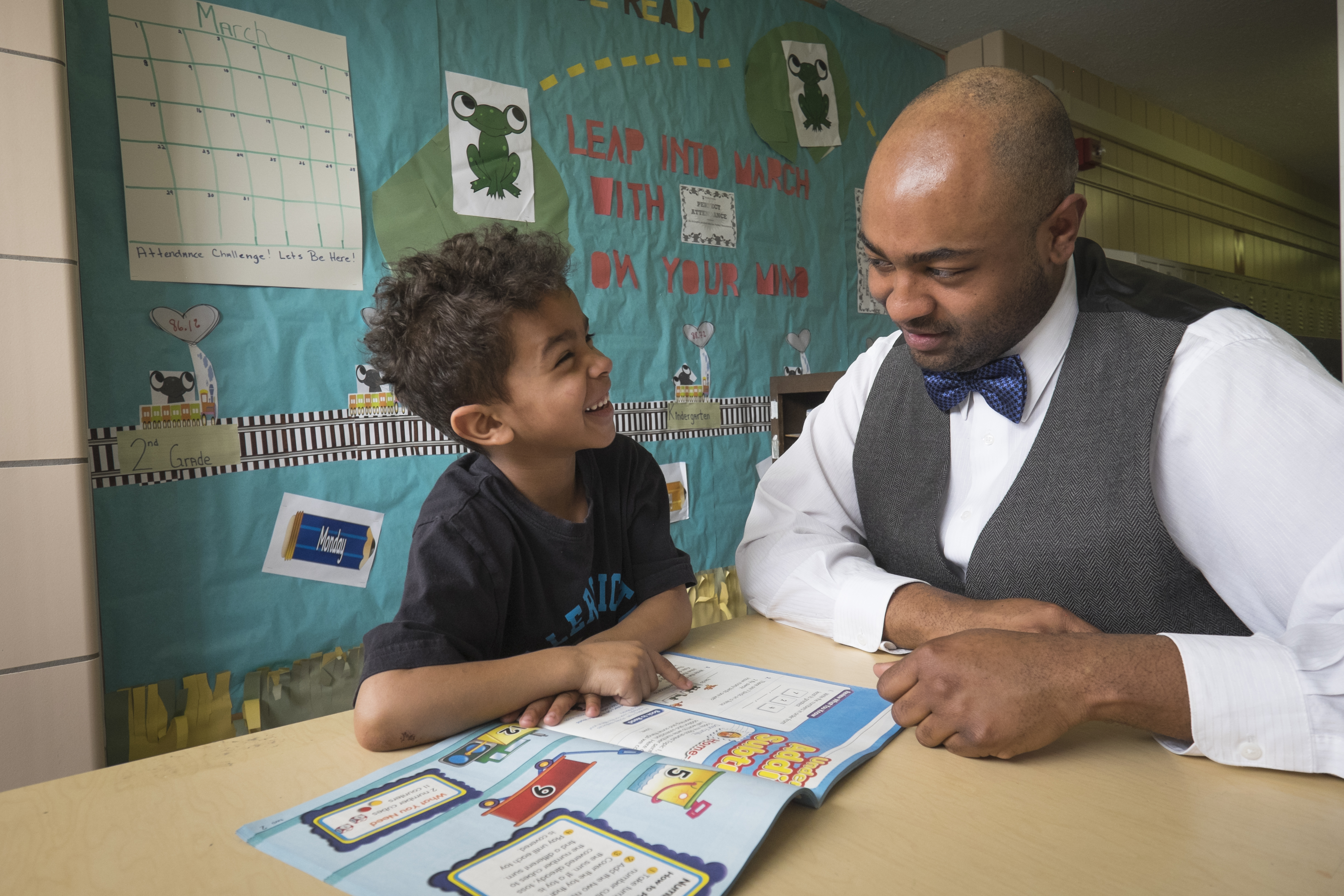
Building on the school’s strong history of federal funding to support behavioral health-focused social workers, Assistant Professor of Social Work Rachel Gartner hopes the new Youth Behavioral Health Workforce (YBHW) Fellowship will incentivize Pitt students to choose careers that support the most vulnerable children and youth. In October 2025, the school received a $2.3 million grant from the federal Health Resources and Services Administration (HRSA) to launch the four-year fellowship program, which is one of several initiatives to address the local mental health workforce crisis.
During each of the next four years, 14 second-year/advanced standing MSW students in the YBHW fellowship will receive $25,000 annual stipends and participate in seminars and other specialized training they’ll need to serve in high-need and underserved communities, says Gartner.
The first cohort of YBHW fellows began in fall 2025. They are already gaining hands-on experience through practicums at sites such as UPMC Center for Children and Families, UPMC Children’s Hospital, WPIC Inpatient, the Beacon, UpStreet, the University of Pittsburgh HEART program, and a host of other sites.
Over the next four years, the Pitt program will support 56 MSW students, expand practicum partnerships across the region, and provide professional development for those already working with youth.
For MSW Program Director Yodit Betru, meeting today’s workforce challenges means staying focused on the curriculum and practice.
That perspective is what helps to give Betru “a strong sense of the educational component and what students are going to do, and what we’re preparing them to do.” Despite the current context of extraordinary social, political, and economic challenges, in many ways, the social work landscape looks much the same as it ever has, with social workers “responding to the needs of vulnerable people and systems” adds Betru.
Betru is also tracking the over-whelming demand for professionals who have the skill set, approaches, and orientation to help, often in the healthcare sector. Compounding the situation are environments where resources are stretched thin and the demand for patient services is mounting. It’s a recipe for social work burnout, says Betru. This is why the school prepares students to recognize complexity, to anticipate strain, to build skills for navigating challenging systems, and to know when and how to mobilize resources for themselves and others so they can sustain and thrive in the profession.
A confident Betru says Pitt students are up for today’s workforce challenges. They are well trained professionals who are equipped to respond to challenges with intention, support, and strategy.
Preparing social work students to step into their dream job after graduation, to work in high-needs service areas, or lead their own practice, is multilayered and begins when they enter Pitt, says Michele Gordon who directs Career Services and Continuing Education.
“Our efforts to support students are a part of a continuum that tracks to graduation and beyond,” adds Gordon, who is creating new and tailor-made tools, materials, and programs to bolster those efforts. The Pitt alum says she is also excited to engage other social work graduates in the process. So far, offerings include a kind of “masterclass” that allows for more intimate sharing and conversations between alumni and students. Another is a new mentoring program for alumni and students that rolled out last fall and is available to all students, including those in the new online cohort, says Gordon.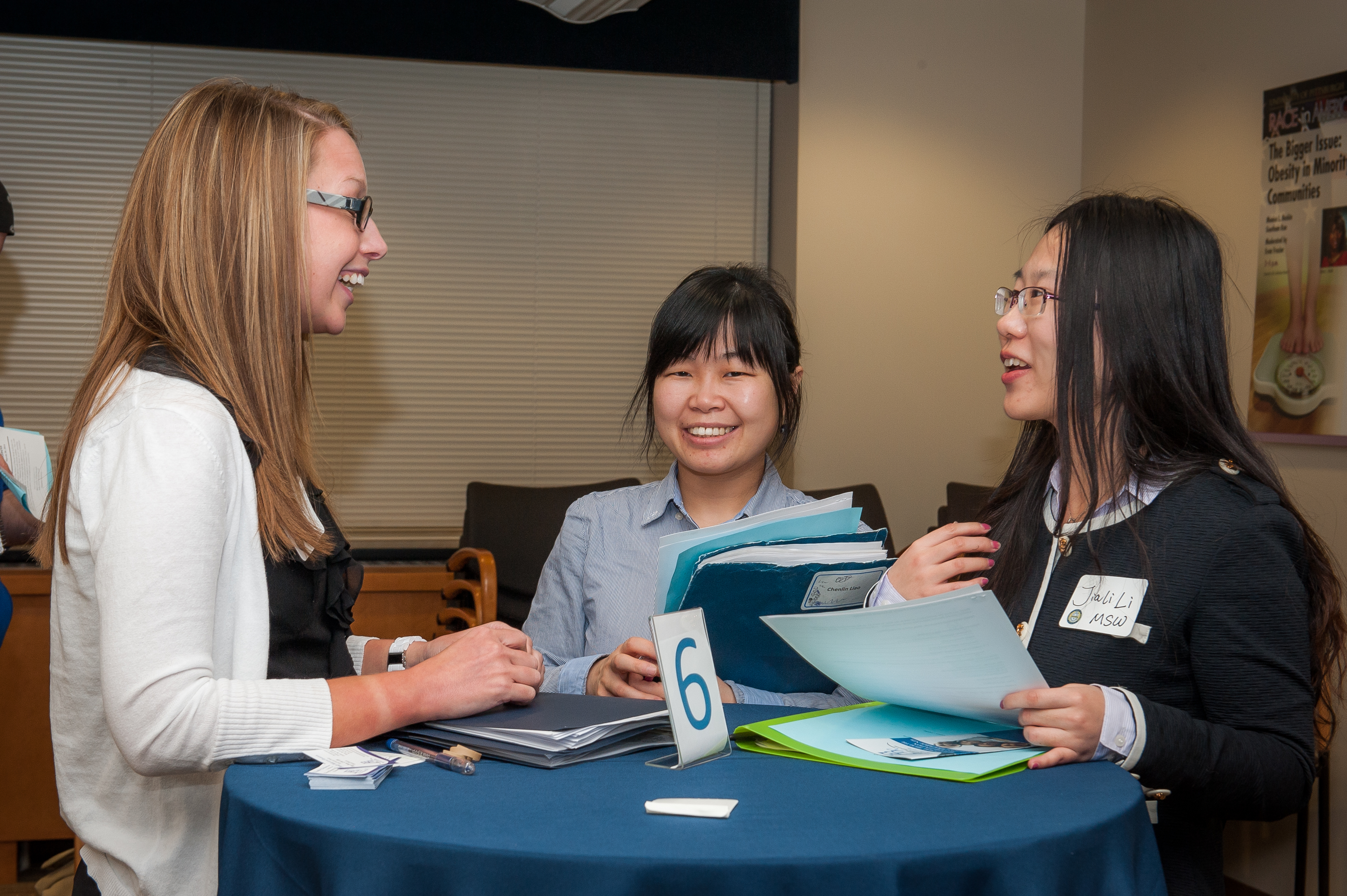
When she assesses the evolving demands in the profession and the social work workforce, Gordon says “it’s important for social workers to prepare to work in an interdisciplinary setting“ and with collaborative teams. Pitt-trained social workers will be stepping into workplaces where systems are complex, needs are multifaceted, and interprofessional education and interdisciplinary practice have become the norm in many settings and sectors.
The good news: “We’re definitely moving in the right direction in terms of our offerings for students,” adds Gordon, referring to the career-focused opportunities her team makes available, such as licensure exam prep, career fairs, and a social work mentorship program. Beginning this spring, the Van Kirk Career Center’s workforce development initiatives will focus on providing co-curricular experiences and events that will support students in enhancing career readiness competencies and in cultivating social work leadership skills. At the same time, Gordon wants to more fully engage alumni in the process of honing skills and preparing students for their place in the field.
“As we plan and develop these programs and tools, we are thinking about the richness and expertise in our social work alumni, and how do we bring them to the table.”
Launched in fall 2025, Pitt’s part-time, online MSW option offers a new degree opportunity to help more people earn their MSW and prepare for careers in the field.
To start, this option opens the door for students who want an MSW experience with the flexibility to learn, reflect, and lead from wherever they are,” says Stevara Haley Clark, EdD, MSW, the school’s Director of Online Programs and Distance Education. It’s part of her pitch.
But practically speaking, says Clark, who made her own online journey as a graduate student, choosing Pitt’s online MSW degree option “is about making sure that a parent balancing kids’ activities and needs is a full-time professional, or someone living across the country can still get a Pitt Social Work education.”
As a doctoral candidate and working mother, those things mattered to Clark when she enrolled in an asynchronous degree program for her doctorate. The degree option and ability to study and learn without having to travel to a campus, she adds, represented accessibility and opportunity — what she wants to offer Pitt MSW students.
Pitt’s top-ranked MSW degree program recently enrolled a 67-member, inaugural, online cohort. Its students reside in 15 states, with about half of the online students living in Pennsylvania. “Our online cohort brings a remarkable blend of passion, purpose, and lived experience. They’re eager to engage, build community, and support one another — creating a dynamic, deeply human learning space that inspires all of us,” says Clark.
Clark is focused on creating opportunities for online students to “collaborate with each other and be engaged with Pitt, no matter where they live and work in the world.” She can still recall the urging of a professor who addressed the members of her doctoral cohort when they began their academic journey: “work together” and “find your people” so that “no one falls behind.” And that was a revelation.
”We found ways to collaborate and stay connected and motivated virtually,” Clarks says. For example, they formed study groups and made time to “hop on a spontaneous Zoom call” with cohort members in search of support or who needed to huddle.
“I want to instill that spirit of collaboration for our Pitt online social work students,” adds Clark, who plans to borrow the Bridges name and the connection theme it represents for monthly, student-centered webinars, lunch and learns, and other “engagement events” to help build community. “These opportunities will be optional, but I want students to see that as a program and as a school, we care about them collectively and encourage them to engage with each other online and off.”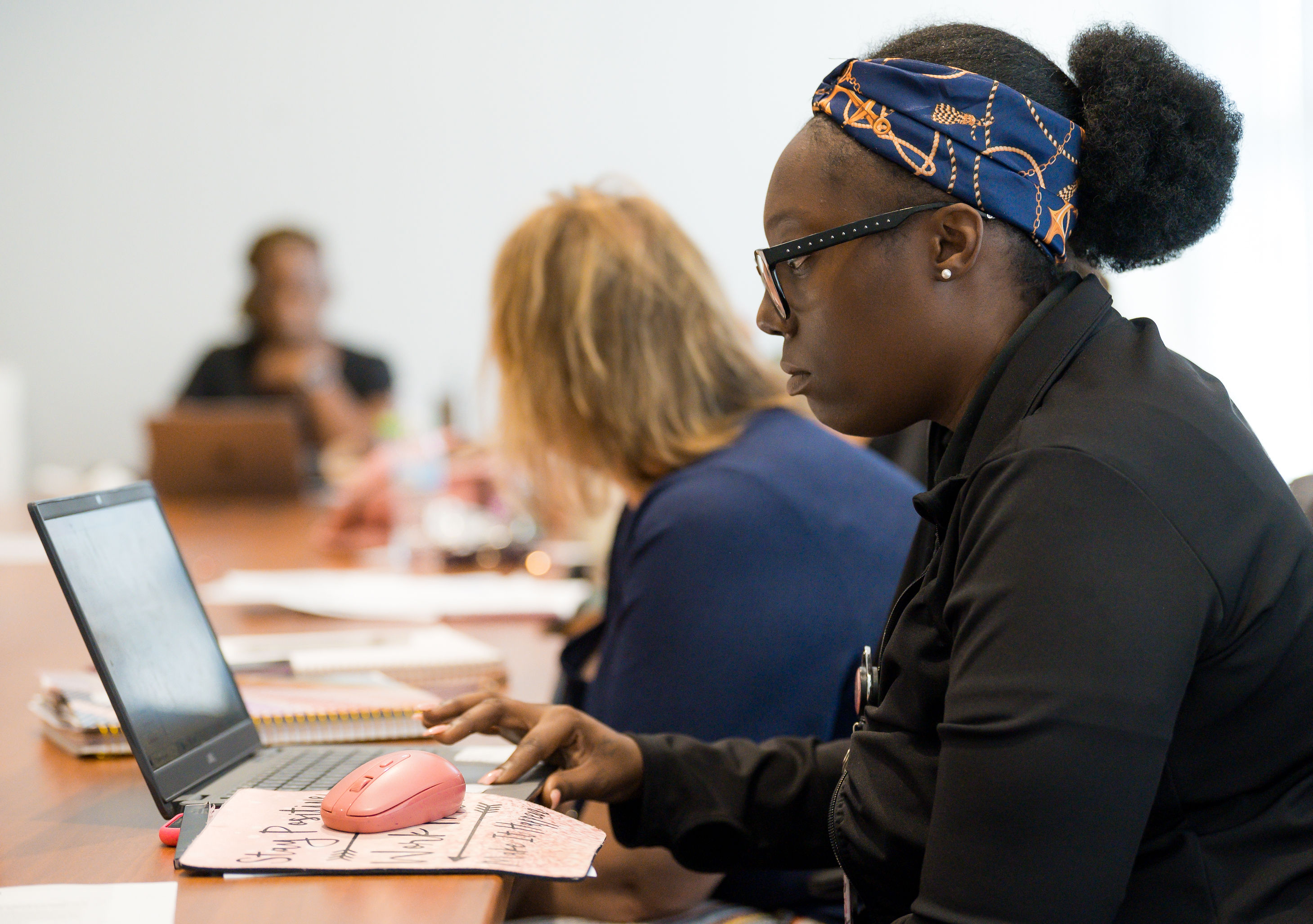
In his Social Work Practice with Diverse Populations course, Assistant Professor Victor Figuereo could move about the room and maybe dance as his students presented and played songs that inspired them or held special meaning. It was fun. Aspects of that course, in-person, could stoke the senses and was designed to be highly interactive and engaging. It is his teaching style, Figuereo says. Now that he’s teaching online, he’s had to pivot — and roll “with the challenges and rewards” of adapting small-group discussions, or an asynchronous environment,” for example.
But it’s working, adds Figuereo, who is also concerned about building community with his students online. Likewise, he is urging them to create communities of their own. Their efforts are taking shape.
Figuereo is using music, which he calls “a powerful connector,” to build community. Through the Music as Life Project, he invites his online students to upload and share audio files of their favorite song and a video of themselves. Outside of the students’ digital classroom, community building has begun over shared musical interest, says an excited Figuereo. “As a result, they have invited each other to concerts and planned meetups offline.”
Clark has been tracking the “dramatic ‘tech shift’” in higher education and online learning. “It once meant putting up lecture slides and calling it a day,” offers Clark, who developed and directed the MSW and BSW degree programs at Virginia Commonwealth University’s School of Social Work before coming to Pitt in June 2025.
In the School of Social Work, “we’re creating dynamic learning spaces — discussion boards that spark real debate, breakout rooms that feel like miniclassrooms, and multimedia tools that let students show off their creativity,” Clark says.
“Students expect a community, not just a course — and the technology has finally caught up to make that possible.”
With an undergraduate degree that included concentrations in Spanish, French, and anthropology, and a master’s in library science, Cait Sanders spent nearly a decade working in her local public library in Oklahoma City.
She was that librarian who fashioned enticing book displays and developed creative programs. Sanders was also the resident “tech person” for library staff and visitors. With some trepidation, older adults flocked to Sanders’ weekly drop-in tech support sessions. They came bearing the tablets, cellphones, and other devices they wrestled with more than they used. Many entered wearing a look of defeat or called themselves “tech illiterate or stupid.” But an empathetic Sanders met each one of them with a smile and praise for “coming in and still trying to learn something new.”
Today, when Sanders, now a second-year MSW student and former librarian, considers what helped put her on a path to a career in social work, she easily points to two things. First, the time spent with older adults who sought her out at the tech help desk. She says, “Those encounters helped me to grow my compassion and interest in working with older
adults.” The second was Whole Person Librarianship: A Social Work Approach to Patron Services, the game-changing book she discovered while at a national library conference. After meeting the book’s coauthors there, one a social worker, “I knew this [social work] was it for me,” says Sanders of her epiphany.
When Sanders graduates this year, she will also receive a certificate in gerontology, one of the specialized curricula planning templates Pitt offers students who want to serve the fast-growing population of older adults. By 2040, about one in five Americans will be age 65 or older, up from about one in eight in 2000, according to Census Bureau data. These are Sanders’ “people.”
For more than four decades, meeting the human services needs of an aging population is what the School of Social Work has been preparing students like Sanders to tackle head-on with paid, tailored practicum experiences; sought-after fellowships; and research opportunities. Since the early 1980s, a certificate in gerontology has been an anchor in the school’s specialized training, says Beth Mulvaney, a gerontology scholar and the Direct Practice Chair and Clinical Assistant Professor.
In 2005, with funding from the Hartford Foundation, the School of Social Work established the two-year Hartford Partnership Program for Aging Education. It supports a paid fellowship that provides both BASW and MSW students with a foundation for working with a diverse older adult population. The program includes coursework, competencies, and a focused practicum experience, adds Mulvaney, who oversees the fellowship.
Sanders is a Hartford Fellow. She is doing her paid practicum at UPMC’s Palliative Care Clinic in Monroeville, PA, where she has a Pitt alum for a supervisor. When asked about the kind of experience her practicum has offered recently, Sanders talks about joining patient rounds in the hospital, learning how to talk to families gripped by a loved one’s chronic illness, and recently witnessing the act of gratitude a terminal patient showed his healthcare team.
Then Sanders shares what she knows for sure since training at the UPMC clinic: “I’m where I belong.” That’s on a path to work in palliative and hospice care, where, according to NASW, there is a critical shortage of social workers. In geriatrics, Sanders says, “I have found my people.”
In a typical practicum week at the hospital, Sanders will likely “sit with a patient in their last days or hours on Earth.” Sometimes she just holds their hand. It’s an act that comes naturally. Sanders comes from a family of “helping types” and finds “terminal illnesses and end-of-life issues” compelling, not daunting — all things that she says make her “well-suited for this work.” And Pitt is helping her gain the experience with opportunities like this one to “learn while doing” in a well-matched practicum. It’s the “signature pedagogy” and, for many students, “the pathway to employment,” says Practicum Assistant Professor Amy DeGurian (MSW ’94), who has been a full-time member of the practicum education department since 2013. Practicums are “what make social work great.”
Camille LaRock, a BASW student from Connecticut, is also a Hartford Fellow. Like Sanders, a practicum helped LaRock find “her people” and social work focus. Since interning at a paid practicum site, Community LIFE, a Pittsburgh organization that empowers older adults to remain at home as they age, “I’ve solidified my interest in working with older adults,” especially those with intellectual and other disabilities, says LaRock. The calling to work in geriatrics is personal for LaRock, who grew up surrounded by close relatives who lived to be 100 or more.
Through her Hartford Fellowship, LaRock is excited to also explore social work through gerontology research. She finds herself in the community and in the lab as a member of Assistant Professor Quinton Cotton’s research team that is working on “Advancing Intergenerational Networks for Dementia Care in Black Communities.”
“I welcomed the opportunity to learn about this side of the field and to think like a researcher,” says LaRock, who is also interning at Pittsburgh’s Alzheimer’s Disease Research Center, where she shadows and learns from an interdisciplinary team of healthcare providers.
Linda E. Lese (MSW ’84) remembers it well — waiting several years after graduation and practicing in the field before applying to be a practicum instructor.
“I was eager to give back,” says Lese, who accepted a social work student the first year she was eligible. That was more than three decades ago. Today, the long-time practicum instructor and veteran social worker continues to do the same at UPMC Presbyterian hospital, where she is a rehabilitation expert discharge plan manager.
Ryan Hylton (BASW ’95) was an undergrad and Lese’s first practicum student. After many years the pair reconnected. Hylton still knew where to turn for the sound social work wisdom and guidance that Lese is known for sharing with her Pitt students and hospital colleagues. In their two-hour call, Hylton received what he needed, and shared laughter too.
“It was so much fun catching up with Ryan. It was like a reunion,” says Lese, who can still remember nearly all of her students. She has befriended some of her former Pitt students-turned-professionals when they reach out to her on social media. These days, Lese calls Ashley Angiolelli (MSW ’24), her most recent graduated practicum student, a colleague. Within months of graduating, Angiolelli started a job at UPMC Presbyterian, where she is a neuro trauma discharge planner, a social work position that she credits Lese and her hospital practicum experience for helping her land.
“Linda set me up for success, thoroughly teaching and always leading by example,” offers Angiolelli.
At UPMC Presbyterian, Lese insists on sharing her office each year with a Pitt intern. She considers it as much of a training ground and classroom as the busy hospital spaces they must learn to navigate. She enjoys the ease and teaching moments that come from sitting face-to-face with a student and responding in real time to their questions. For Lese, teaching and togetherness are her hallmark practicum style.
During challenging days and when she has pressing questions, Angiolelli admits she still makes her way back to Lese’s office.
Lese involves her interns “in every aspect of patient care.” It’s something they do together, nearly all the time. But when she thinks her students “have grown” and are ready to practice with confidence what they are learning from her — like how to communicate effectively with physicians or work with a multidisciplinary healthcare team — Lese “lets them branch off.”
Over the years and with one Pitt student at a time, Lese says her aim has been to make each practicum experience impactful, not hours filled with busywork and tasks to complete. As a leader, mentor, and practitioner, Lese says it’s important to keep a pulse on social work best practices and trends and stay in the know about what Pitt students are learning. “That way, I can work on bringing classroom lessons to life and knowledge from the field full circle” for students.
At this year’s annual Alumni Awards, Lese was recognized with one of the school’s Alumni Service Awards for her service through teaching and training the next generation of social workers.
Through fellowships that provide hands-on experience and specialized training, mentorship, and a new online MSW degree program option, the Pitt School of Social Work prepares and develops students who are ready to enter the workforce and practice and lead in today’s high-need areas — child welfare, gerontology, mental health, healthcare, community organizing, policy, and beyond.
Paid fellowships are sought-after and are pivotal to preparation and training. As faculty like Gartner know, fellowships can provide a powerful incentive for students to ultimately pursue critical areas of social work practice. By offering financial support and structured training, paid fellowships not only help to reduce barriers to entry; they also create rich opportunities for students to gain specialization in fields where the need is greatest.
Mentorship offers guidance and support, fostering confidence and long-term career growth.
Online education expands access to advanced learning, enabling flexibility for working professionals and reaching diverse communities.
Together, these strategies create a pipeline of skilled, committed social workers ready to serve where they are needed most.
Provide Mentorship: Sign up to be a part of the school’s fall or spring mentorship programs.
Become Practicum Advisors: As the online MSW degree program develops, we would especially value leads on possible practicum placements in the areas where online students are concentrated.
Promote Job and Training Opportunities: Share job announcements, fellowships, and other professional training activities with the school’s career center that supports both students and alumni.
Consider Philanthropic Support: Give to support paid practicums, fellowships, and/or scholarships that support Pitt Social Work students.
Gain Continuing Education: Need to earn CE credits? Turn to Pitt. You can also share ideas for new CE offerings or even lead a course.
The School of Social Work is constantly exploring innovative and impactful ways to prepare the next generation of social workers to meet urgent needs. Join us by sharing your ideas for strengthening this pipeline. We are eager to hear from you. Contact Amanda Paul at amp521@pitt.edu.
